
THE MOST POPULAR PROGRAMMING LANGUAGES TODAY
This article presents the 7 most popular programming languages today. Their use is described, as well as their advantages and disadvantages. Today's trends in programming are described in the following article.The most popular programming languages in 2024
1.Python- Popularity: Very popular for its simplicity and readability.
- Usage: Data science, machine learning, web development, automation.
2. JavaScript
- Popularity: Indispensable in web development.
- Usage: Frontend and backend development (through Node.js), mobile application development.
3. Java
- Popularity: A long-time favorite in business applications.
- Usage: Enterprise applications, Android development.
4. C#
- Popularity: A powerful language for developing Windows applications.
- Usage: .NET framework, games (through Unity engine).
5. C++
- Popularity: Used for high performance systems.
- Usage: System software, games, real-time simulations.
6. TypeScript
- Popularity: Increasingly popular as a JavaScript upgrade.
- Usage: Large projects, frontend development.
7. SQL
- Popularity: Essential for working with databases.
- Usage: Data management, analytics.
Python programming language
Python was created by Guido van Rossum and first published in 1991. It was named after the British comedy "Monty Python's Flying Circus". Since then, Python has gone through several versions, with the big move to Python 3 in 2008, which brought many improvements, but also incompatibilities with Python 2. It became very popular due to its simple syntax, readability, and large user community.Using Python
Uses of PythonPython is used in many areas, including:Web Development:
- Frameworks: Django, Flask.
- Usage: Back-end development, APIs, web applications.
- Libraries: NumPy, Pandas, SciPy, scikit-learn, TensorFlow, PyTorch.
- Uses: Data analysis, predictive modeling, big data processing.
- Usage: Automation of repetitive tasks, systems management.
- Frameworks: Pygame.
- Use: Development of simpler games and prototypes.
- Usage: Writing scripts for network management, automating administrative tasks.
Use: Writing software for resource-constrained devices.
Example Code in Python
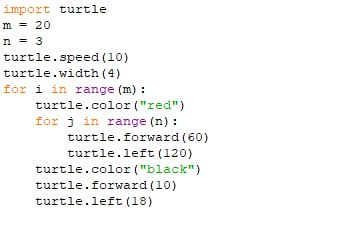
Figure 1: Example code in Python. Complicated Zvetda - code
|
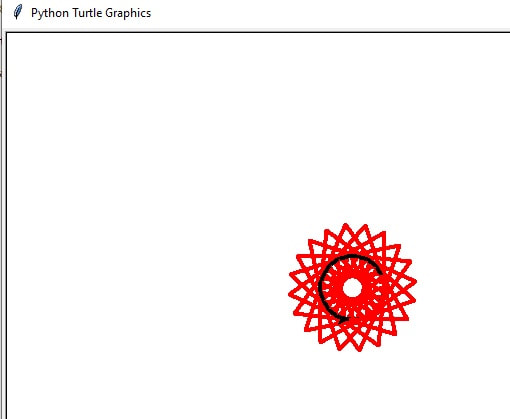
Figure 2: Example code in Python. More complicated Zvetda - execution in IDLE environment
|
Advantages of Python
- Simple syntax: Python is known for its readability and simplicity, which makes it easy to learn and use.
- Large community and support: A huge developer community offers support, tutorials and a library of solutions.
- Many Libraries and Frameworks: There is a rich ecosystem of libraries that enable rapid application development.
- Multipurpose language: Can be used for a variety of tasks - from web development to machine learning.
Disadvantages of Python
- Execution speed: Python is an interpreted language, which means it can be slower compared to compiled languages like C++ or Java.
- Memory consumption: Python can use more memory compared to some other languages, which can be a problem for applications with limited resources.
- Global Interpreter Lock (GIL): This mechanism can be a limiting factor in multithreading in CPU-intensive applications, as it prevents multiple Python threads from executing in parallel.
Conclusion:
Python is an extremely versatile and useful language that has found application in many areas of programming. Its simplicity and wide use make it an ideal choice for beginners as well as experienced developers who want to quickly develop different types of applications.Javascript programming language
JavaScript was created by Brendan Eich in 1995 while working at Netscape Communications. Originally called "Mocha", then "LiveScript", it was finally renamed "JavaScript" to take advantage of Java's popularity.In 1997, ECMA International standardized JavaScript under the name ECMAScript. Versions of ECMAScript (such as ES5, ES6/ES2015) bring new improvements and functionality to the language.
JavaScript has gone through many changes and improvements, becoming the key language for developing modern web applications.
Use of JavaScript
JavaScript is used in a variety of areas, including:Web Development:
- Frontend: DOM manipulation, interactive web pages, dynamic content.
- Libraries and frameworks: React, Angular, Vue.js.
- Node.js: A platform that enables the execution of JavaScript on the server.
- Usage: API development, server-side scripting, real-time applications.
- Frameworks: React Native, Ionic.
- Usage: Development of hybrid and native mobile applications.
- Electron: Enables the development of desktop applications using web technologies (HTML, CSS, JavaScript).
- Frameworks: Phaser, Babylon.js.
- Usage: Development of 2D and 3D games that run in the browser.
Advantages of JavaScript
- Simplicity and accessibility: JavaScript is relatively easy to learn, especially for beginners.
- Interactivity: Enables the creation of dynamic and interactive web pages.
- Speed: Executed on the client side (in the browser), which enables fast response without the need to communicate with the server.
- Wide use: Supported by all modern browsers.
- Large Ecosystem: Huge number of libraries and frameworks that facilitate development.
Example code in Javascript. The p5.js library
The following code was created in the p5.js library which represents the javascript version.p5.js is a JavaScript library designed to facilitate the creation of visual and interactive applications, and was created as part ofProcessing community.
See more about processing with the JAVA programming language on the page: Processing - introductionp5.js is inspired by Processing, a programming language and environment developed for electronic art and visual design. Processing is based on the Java language, while p5.js is developed for JavaScript and the web.
The goal of p5.js is to make it easy to create graphic, interactive, and artistic projects using JavaScript.
Here's a simple example that draws a circle in the center of the canvas:
function setup() {
function draw() {
An example of javascript code for handling events is shown in the following image:
createCanvas(400, 400);
}function draw() {
background(220);
ellipse(200, 200, 50, 50);
}
ellipse(200, 200, 50, 50);

Figure 3: Example Javascript code that handles events for an animation application of a body sliding down an inclined plane
p5.js is a powerful and affordable JavaScript library that allows easy creation of visual and interactive applications. It's an ideal tool for artists, designers, and educators who want to program in a visual context, and its foundation in JavaScript allows for easy integration with web technologies.Conclusion
JavaScript is an extremely powerful and flexible language that plays a key role in web development. Its ability to be used across platforms, from browsers to servers, makes it an essential tool for the modern developer. With constant improvements and a growing ecosystem, JavaScript is likely to remain a relevant and key language in the future.Programming language JAVA
Java was developed by James Gosling and his team at Sun Microsystems, and was first released to the public in 1995. Originally named "Oak", the language was later renamed "Java".Java quickly became popular due to its portability ("write once, run anywhere"), stability and performance. Oracle Corporation took over Java development when it acquired Sun Microsystems in 2010.
Java is developed through the Java Community Process (JCP), which allows the community to participate in the development of the language.
You can read more about the JAVA programming language on the website: Introduction to Java
Use of JAVA
Java is used in many areas, including:Enterprise applications:
- J2EE / Jakarta EE: Frameworks and services for building large, scalable business applications.
- Usage: Business applications, web services, transaction systems.
- Android SDK: Java was the base language for Android development (before Kotlin became an official language).
- Usage: Development of mobile applications.
- Spring, Hibernate: Popular frameworks for web application development and database management.
- Usage: Backend development, database management.
- Usage: Trading platforms, banking software, portfolio management.
- Hadoop: Java is often used to develop big data analytics applications.
- Usage: Processing of large data sets, analytics.
- Java ME (Micro Edition): Used to develop applications for embedded systems and IoT devices.
- Uses: Embedded systems, smart devices.
Advantages of JAVA
- Portability: "Write once, run anywhere" enables the execution of Java applications on different platforms without the need to modify the code.
- Stability and performance: Java offers a good balance between performance and stability, making it suitable for large business applications.
- Security: Java has built-in security mechanisms that help protect applications.
- Rich standard library: Provides a large number of libraries that facilitate application development.
- Large community: A large and active community of users and developers.
Disadvantages of JAVA
- Execution speed: Although Java is usually faster than interpreted languages like Python, it can be slower compared to native languages like C or C++.
- Memory consumption: Java applications can use more memory because of the JVM (Java Virtual Machine) and memory management system.
- Verbosity: Java code can be very verbose and long, which can make it difficult to read compared to some modern languages.
- Global Interpreter Lock (GIL): Java does not have a GIL, but multi-threading can be complex due to synchronization and concurrency management.
Conclusion:
Java is a powerful, versatile and widely used language used in various industries and applications. Its ability to run on different platforms without modifying the code, stability and security make it ideal for developing large, scalable and robust applications. Java continues to be relevant and popular because of its evolution through the community and constant improvements.Processing
Processing is a specialized programming language and development environment that is used primarily in the field of visual art and design, but also has applications in education. Although it is very popular within its specific communities, it is not as widely used as some of the general programming languages such as Python, JavaScript or Java. However, it can be considered significant and influential in certain circles.
Read more about Processing on the following web page Introduction to Processing
Processing was developed by Casey Reas and Ben Fry in 2001 at the MIT Media Lab.It was created as a tool for artists, designers and educators who want to use code to create visual projects without the need for deep programming knowledge.
Using Processing
Processing is used in a variety of areas, including:Visual Arts and Design:
- Graphic Design: Creating digital images and graphics.
- Interactive installations: Development of interactive art installations.
- Learning to code: Popular in classrooms for learning the basics of programming through visual projects.
- STEM Education: Using it to Teach Science, Technology, Engineering, and Math Concepts.
- Rapid prototyping: Used to rapidly develop and test ideas and concepts.
- Data visualization: Creating visualizations for data analysis.
- Animation: Creating animated sequences.
- Generative Art: Used to create artwork that is generated algorithmically.
Advantages of Processing
- Simplicity: It's designed to be easy to use, allowing you to quickly get started with visual projects.
- Large Community: An active community of users sharing resources, tutorials and projects.
- Visual orientation: The focus on graphics and visualization makes it ideal for artists and designers.
- Platform independence: Available for different operating systems (Windows, macOS, Linux).
Disadvantages of Processing
- Performance: Not intended for high-performance applications, may be slow for very complex or demanding projects.
- Limitation: Less flexible compared to general programming languages when it comes to non-graphical applications.
- Not for production: Used more for prototyping and art projects than for developing production applications.
Conclusion
Processing is a powerful tool for specific purposes, especially in the field of visual arts and education. Although it is not among the most popular general programming languages, its importance and influence within its niche is undeniable. If you're working on projects that involve visualization, art, or education, Processing may be an ideal choice.C# programming language
C# (pronounced "C-sharp") is a modern, object-oriented programming language developed by Microsoft Corporation. Here's a detailed overview of the C# language:C# was developed by Microsoft as part of the .NET initiative. Originally designed by a team led by Anders Heilsberg, it was first introduced in 2000.
C# has gone through many versions, each bringing new improvements and functionality. The language is part of the .NET ecosystem, which enables the development of applications for Windows, the web, mobile devices and other platforms.
It belongs to Object-oriented languages and is similar to the JAVA programming language.
Using of C#
It is used in a variety of areas, including:Windows applications:
- WPF, WinForms, UWP: Development of desktop applications for the Windows operating system.
- Usage: Business applications, productivity tools.
- ASP.NET: A framework for developing dynamic web pages and services.
- Usage: Development of web applications, APIs, e-commerce.
- Xamarin: Enables native iOS and Android app development using C#.
- Use: Development of mobile applications that use shared code.
- Unity: A popular game engine that uses C# for scripting.
- Usage: Development of 2D and 3D games, VR and AR applications.
- Azure: Microsoft's cloud service that supports application development in C#.
- Usage: Scalable cloud applications, serverless computing.
Advantages of C#
- Simplicity: C# syntax is designed to be readable and simple, making it easy to learn and use.
- Integration with .NET: Deep integration with the .NET ecosystem enables easy development of diverse applications.
- Object-oriented: Supports all object-oriented programming paradigms, including inheritance, polymorphism, and encapsulation.
- Rich standard library: Enables application development without the need for additional libraries.
- Tools and Support: Strong support through Visual Studio and other development tools.
Disadvantages of C#
- Platform Dependency: Although .NET Core has enabled cross-platform development, C# has traditionally been tied to Windows.
- Performance: Although fast, it is not as fast as some lower level languages like C or C++.
- Complexity of the ecosystem: The .NET ecosystem can be complex for beginners due to the large number of technologies and frameworks.
Conclusion
C# is a powerful and versatile programming language used in various industries and for various types of applications. Its deep integration with the .NET ecosystem, simple syntax, and widespread industry use make it an excellent choice for developers. Whether it's desktop, web, mobile, or gaming, C# offers a robust solution for many development needs.Programming language C++
C++ is one of the oldest and most influential programming languages. C++ was developed by Bjarne Stroustrup at Bell Labs in the early 1980s. It was originally called "C with Classes" because it was an upgrade to the C language with support for object-oriented programming.The language was renamed C++ in 1983, symbolizing its evolution (in the C language, the ++ operator increments the value by one). C++ was standardized by ISO (International Organization for Standardization) in 1998, and the standards were regularly updated (C++11, C++14, C++17, C++20).
Using C++
C++ is used in many industries and for different types of applications:System software:
- Operating Systems: Many parts of operating systems, such as Windows and Unix, are written in C++.
- Drivers: Development of drivers for various hardware components.
- Desktop applications: Software such as web browsers (eg Chrome) and office suites (eg Microsoft Office).
- Game Development: Many game engines, including the Unreal Engine, use C++ for their performance.
- Web servers: Many highly optimized servers and databases use C++.
- Financial Applications: Algorithmic Trading, Simulations and High Performance Models.
- Embedded systems: Used for software that runs on resource-constrained hardware, such as microcontrollers and real-time devices.
- Graphics Engines: Software for 3D modeling and animation.
- Multimedia programs: Software for sound and image processing.
Advantages of C++
- Performance: C++ provides a high level of control over hardware and resources, enabling high performance applications.
- Portability: Code written in C++ can be compiled and executed on different platforms.
- Flexibility: Supports procedural, object-oriented and generic programming.
- Standard Library (STL): Provides a rich set of functionality, including containers, algorithms, and iterators.
- Large community and tools: Years of use and a large community mean that there are many resources, tools and libraries for C++.
Disadvantages of C++
- Complexity: The language is complex and requires a deep understanding of concepts such as pointers, memory management, and concurrency.
- Memory Management: Requires manual memory management, which can lead to errors such as memory leaks and dereferencing null pointers.
- Long compile times: Larger C++ projects can have long compile times due to the complexity of the language and the size of the codebase.
- Standardization: Although there is a standard, different compilers may interpret specific parts of the language differently, which can lead to code portability problems.
Conclusion
C++ is a powerful, versatile and high-performance programming language used in many mission-critical applications across various industries. Its ability to provide control over hardware resources and performance makes it ideal for developing applications where speed and efficiency are key. Although it is complex and requires a deep understanding of programming concepts, its flexibility and power make it a valuable tool for experienced developers.Typescript programming language
TypeScript is a popular programming language used primarily for web application development. TypeScript is a superset of JavaScript that adds static typing to the language.It was developed by Microsoft and was first published in 2012.
TypeScript compiles to plain JavaScript, which means it can run on any platform that supports JavaScript.
TypeScript is a powerful web application development tool that brings the benefits of static typing and advanced development tools. It is an ideal solution for large projects and teams that want to improve code quality and reduce the number of errors. Its compatibility with existing JavaScript code allows gradual migration and introduction into existing projects.
Using TypeScript
1. Web Development:- Frontend: Used to develop complex web applications with the help of frameworks such as Angular, React (with the help of libraries such as TypeScript-React).
- Backend: Can be used with Node.js to develop server applications.
- Typing: Provides better tools for developing and maintaining large codebases.
Advantages of TypeScript
- Static typing: Adds types to JavaScript, allowing errors to be detected before code is executed.
- Better development tools: Improved tools for autocompletion, refactoring, and code navigation.
- Code Maintenance: Easier maintenance of large codebases thanks to explicit types.
- Compatibility with JavaScript: Because it is a superset of JavaScript, all valid JavaScript code is also valid TypeScript code.
Desadvantages of Typescript-a
- Learning curve: May require additional learning time, especially for developers who are not used to statically typed languages.
- Additional compilation step: Requires a compilation step to translate to JavaScript, which can add complexity to the development process.
- Less flexibility: Strict typing can be limiting in some cases where the dynamic nature of JavaScript is an advantage.
SQL programming language
SQL (Structured Query Language) is a standard language for working with relational databases. SQL is a language for managing and manipulating data in relational databases. It is used to create, modify and query data in databases.SQL is standardized by ANSI (American National Standards Institute) and ISO (International Organization for Standardization), and different databases may implement their own versions with additional functionality.
Using SQL
Creation and management of databases:- DDL (Data Definition Language): Commands such as CREATE, ALTER, DROP for defining and managing the database structure.
- DML (Data Manipulation Language): Commands such as SELECT, INSERT, UPDATE, DELETE for working with data inside tables.
- SELECT: Retrieves data from a database according to certain criteria. E.g:
SELECT * FROM users WHERE age > 25;
Filtering, sorting and aggregation of data:
- WHERE, ORDER BY, GROUP BY: Clauses for filtering, sorting and grouping data.
- GRANT, REVOKE: Control access to data and user privileges.
Advantages of SQL
- Standardization: SQL is a standard language, which makes it possible to work with different database systems using the same language.
- Flexibility: Can be used for complex queries and data analysis.
- Efficiency: Enables fast search and manipulation of large data sets.
- Wide use: It is supported by all major relational databases such as MySQL, PostgreSQL, Oracle, SQL Server.
Disadvantages of SQL
- Complexity: Complex queries can become difficult to write and maintain.
- Performance: Poorly written queries can affect database performance.
- Security: SQL queries are vulnerable to attacks like SQL injection if not properly secured.
Conclusion
SQL is a key tool for working with relational databases, providing powerful functionality for managing and manipulating data. Its standardization and flexibility make it essential to work in many data-intensive industries.| Next Programming Trends>| |